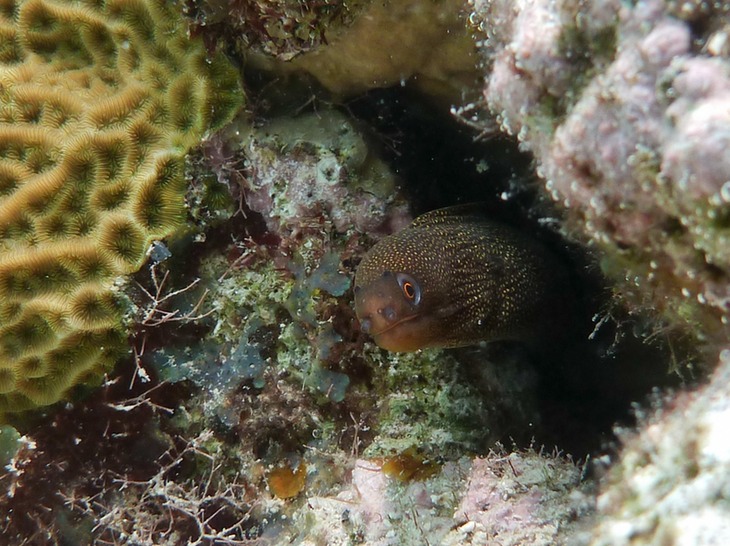
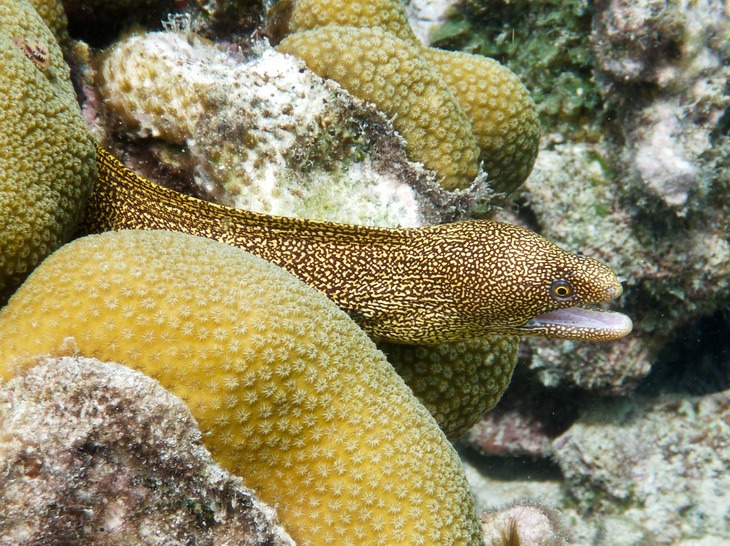
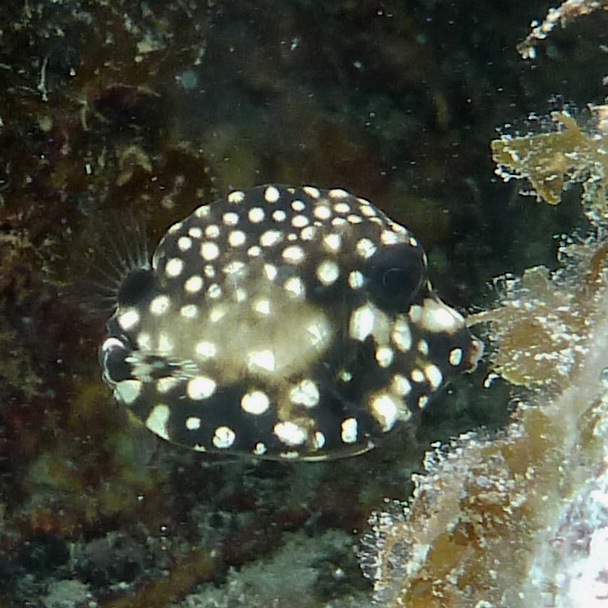
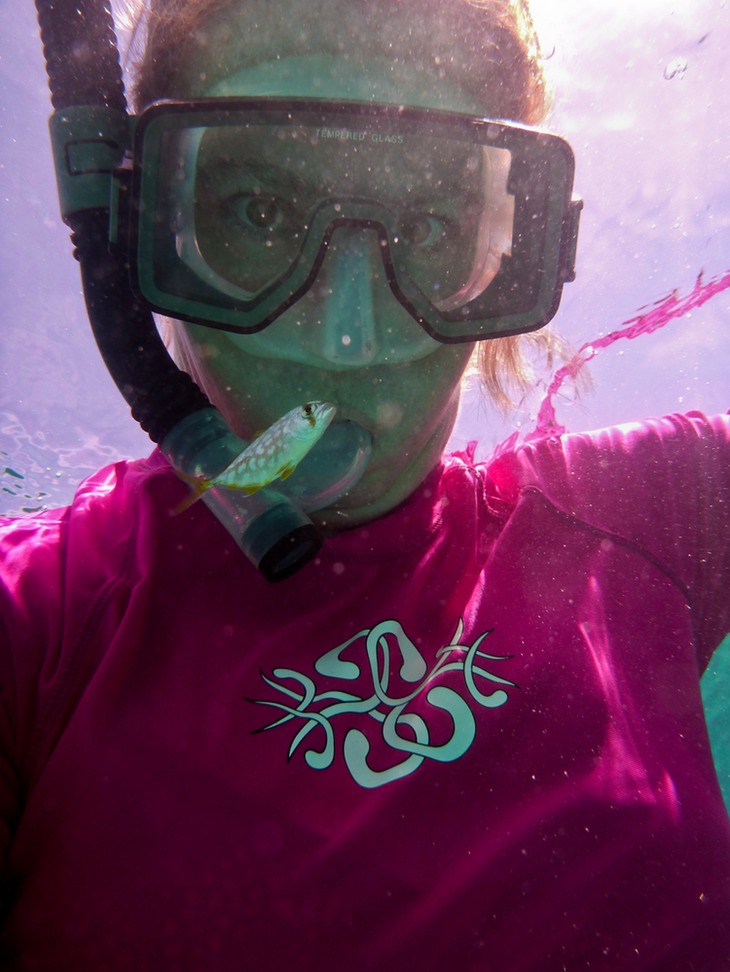
Some of the best picture-taking reefs are shallow, rocky areas with good sunlight, which is also where the fish nurseries can be found. Juvenile fish like to hide in the crevices of reefs and any other shady area that can offer protection from predators... like a sailboat prop, a moon jelly or a human. Oftentimes we get to swim with our own "personal fish".
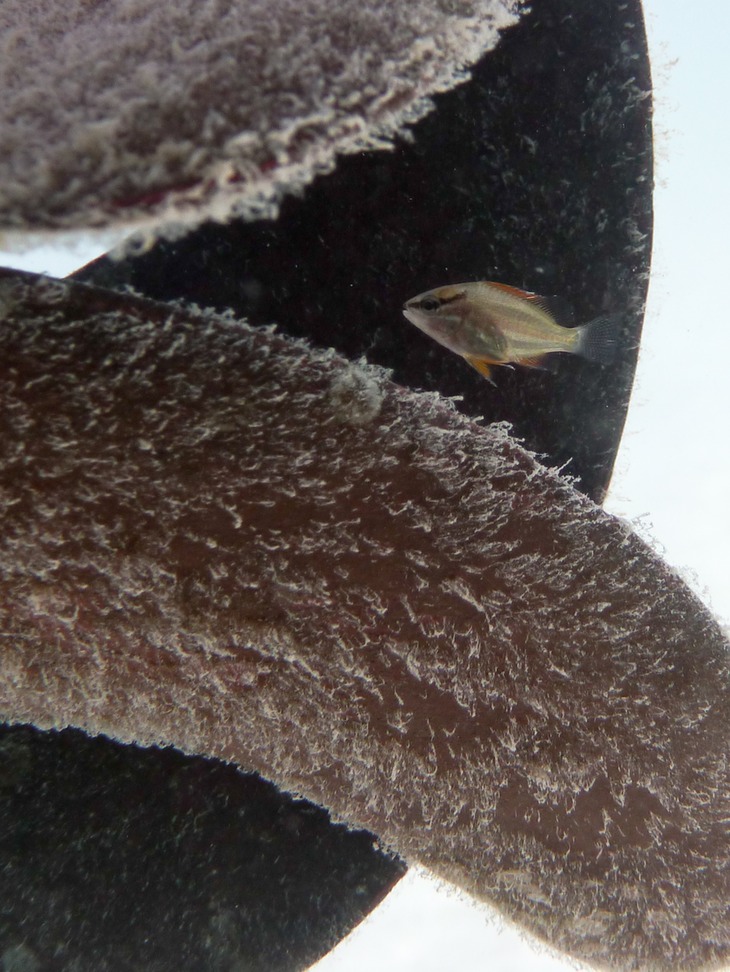

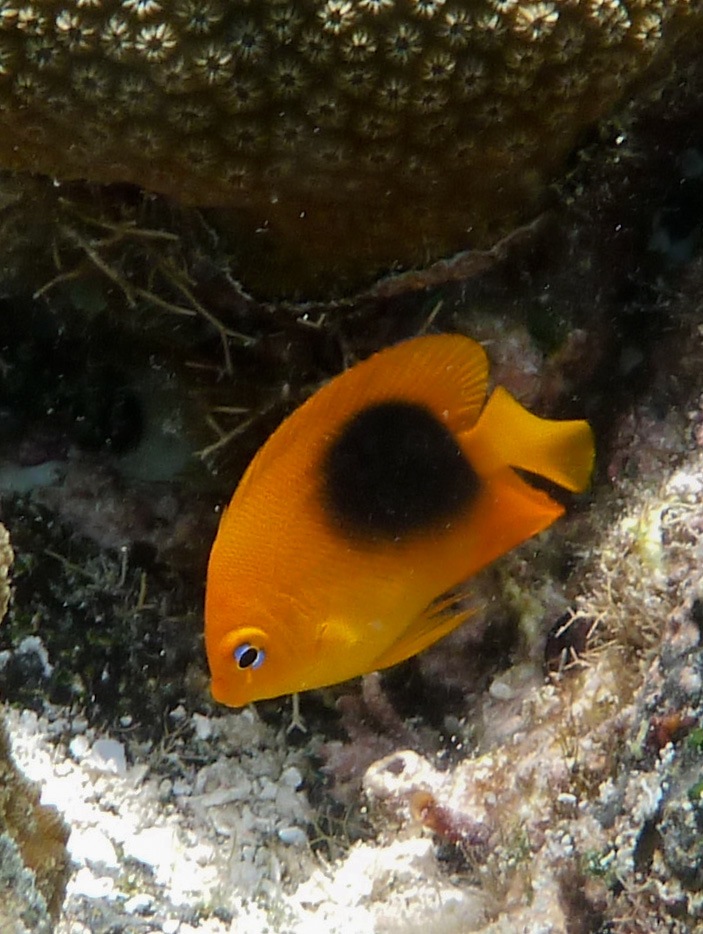
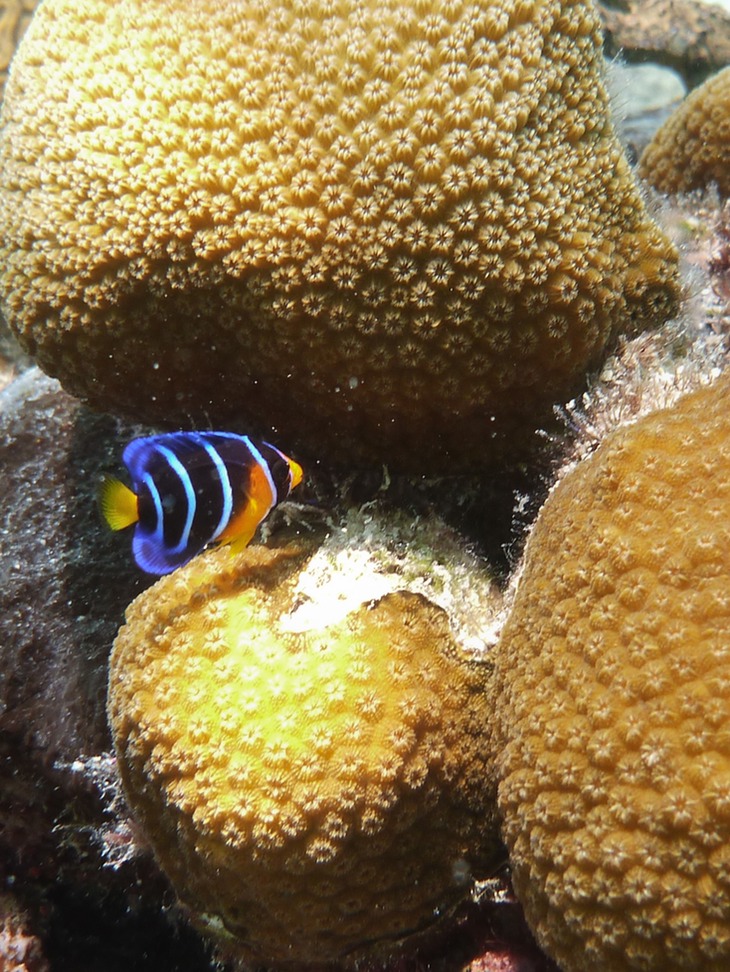
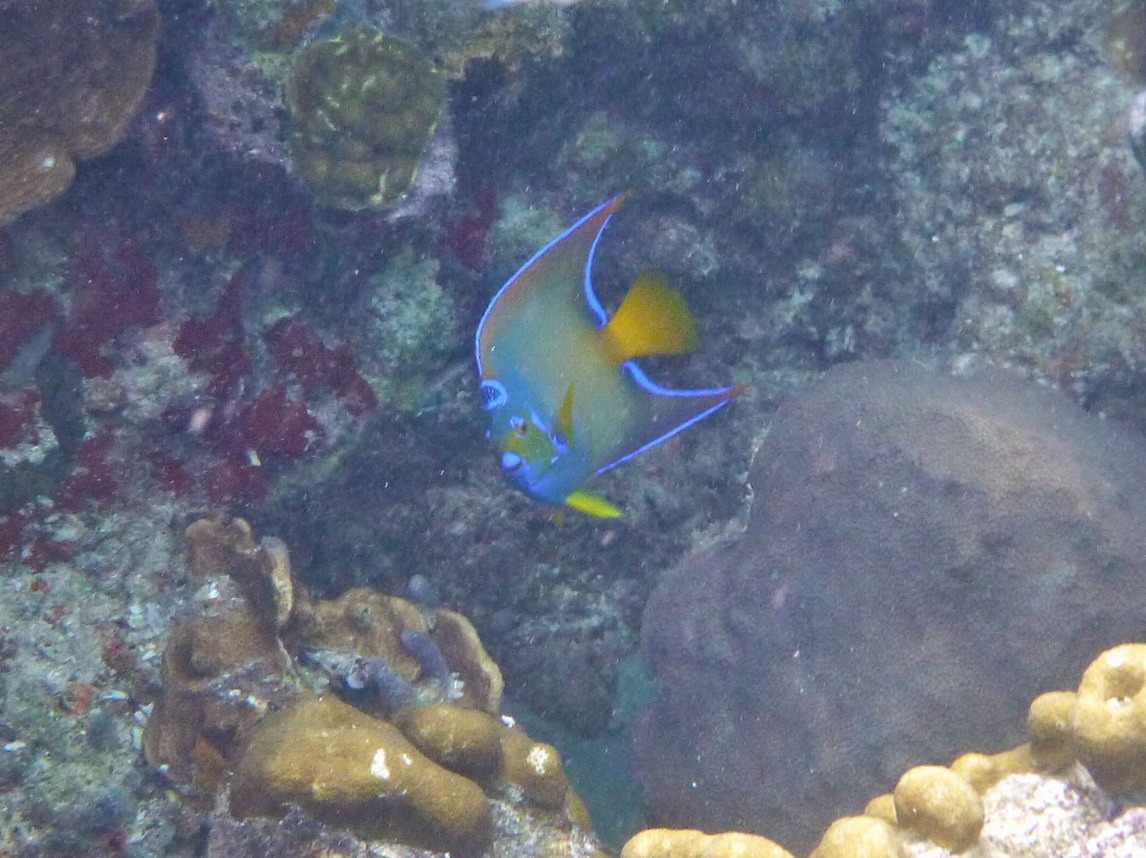
Swimming to a shallow reef just off of the boat, I see a flash out of the corner of my eye and stumble across brilliantly colored juvenile fish about 1 inch in length. Being fast and shy, these guys are are hard to get a good picture with all of their adolescent energy. The queen angelfish and rock beauty juveniles have glowing yellow/oranges and/or iridescent blues. Their elders are just as beautiful but remain quite shy.

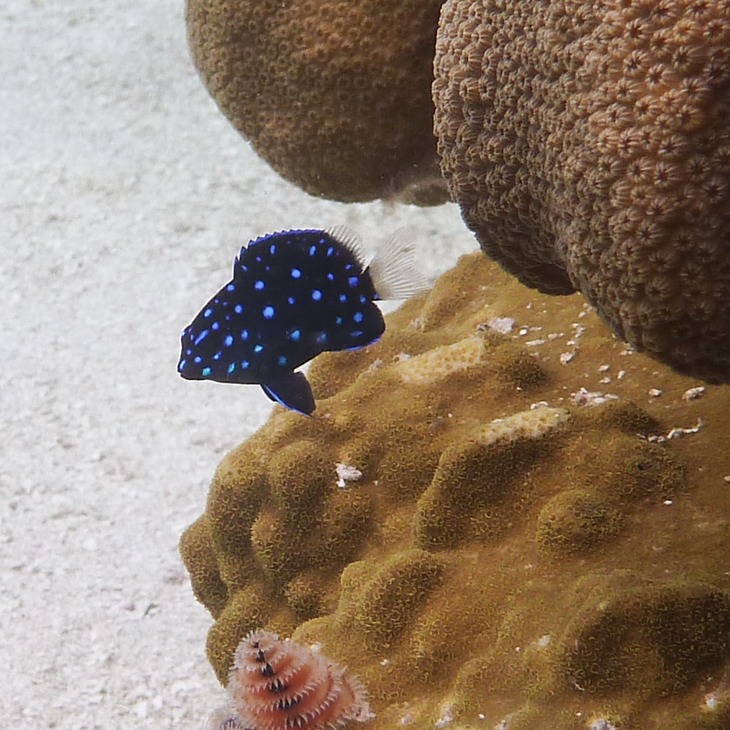
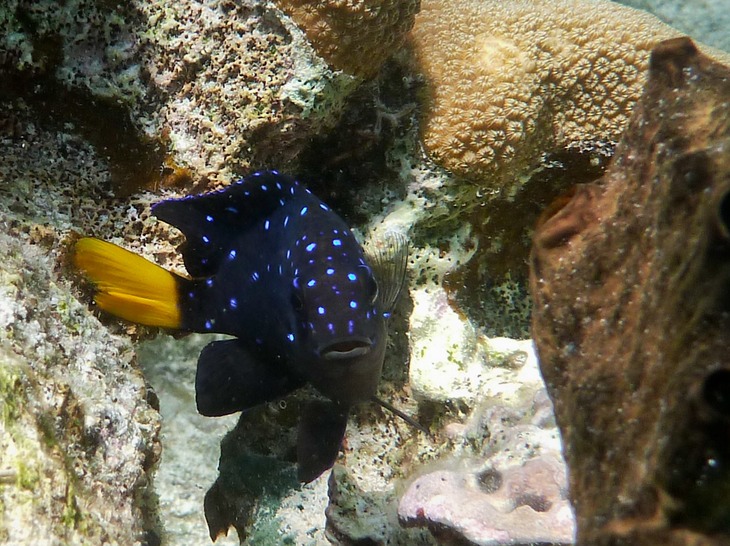
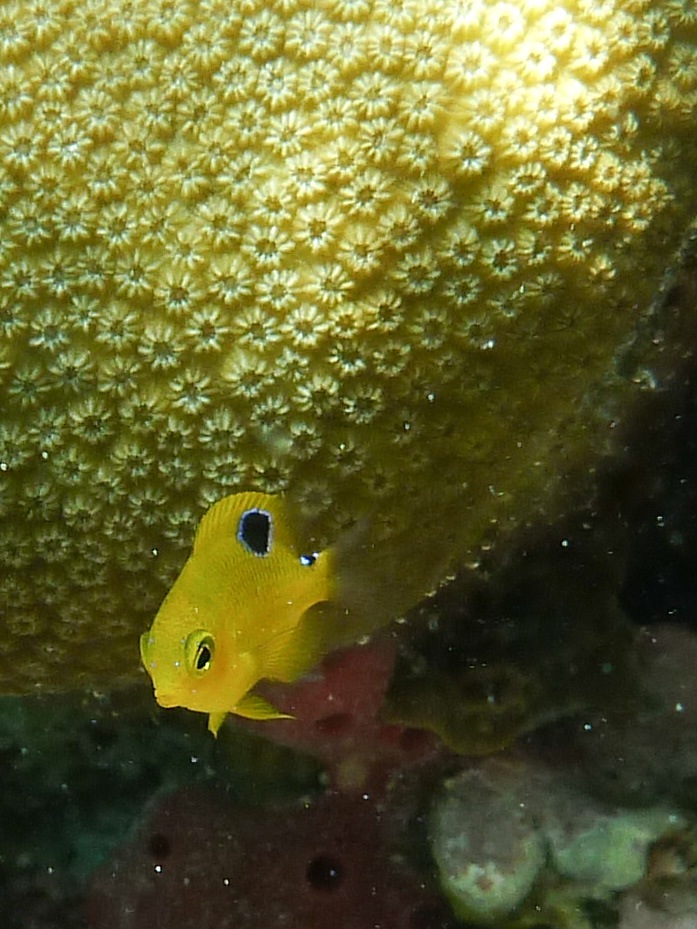
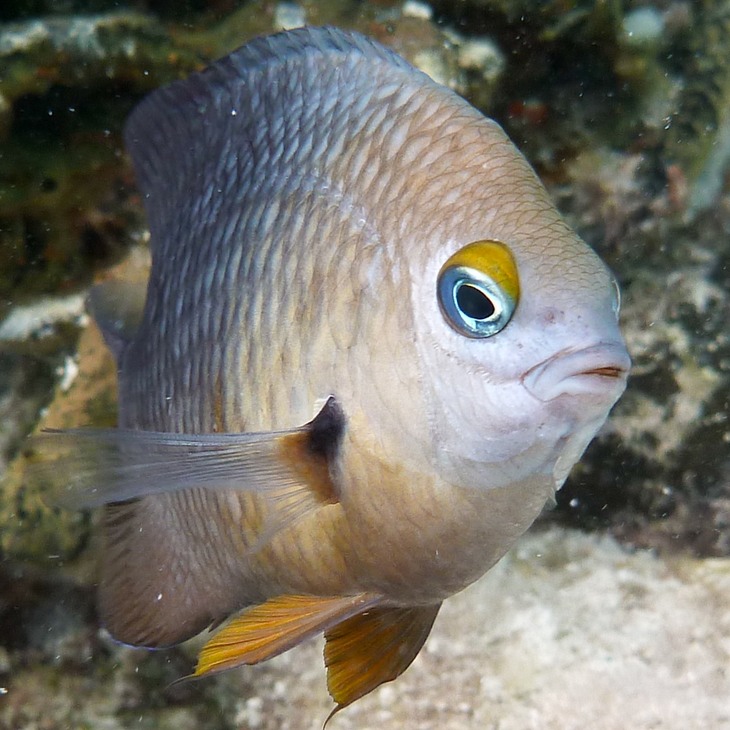
The juvenile yellowtail damselfish is also known as a jewelfish due to its sparkling blue spots. No human is too big for the aggressive threespot damselfish to chase away from his territory. Needless to say, adult damselfish are less camera-shy.
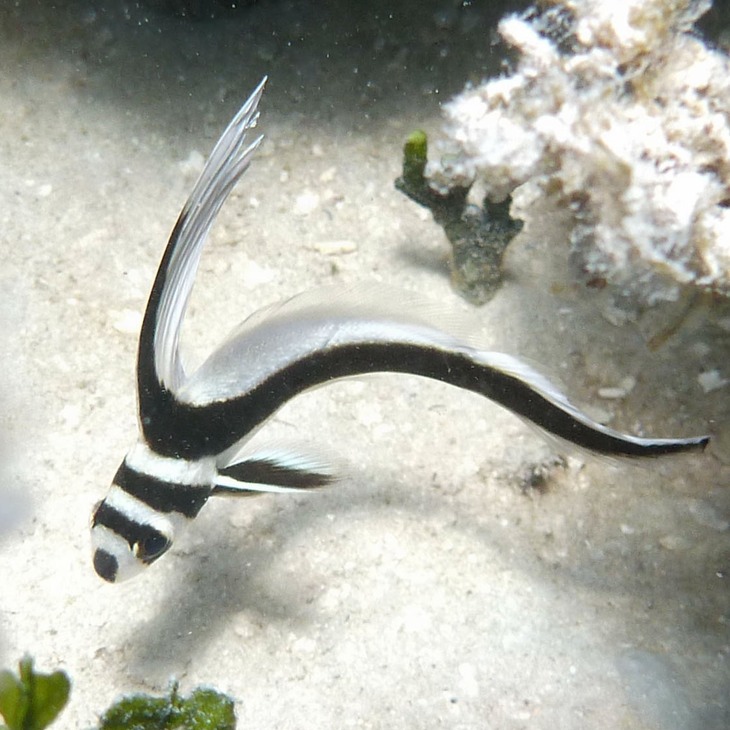
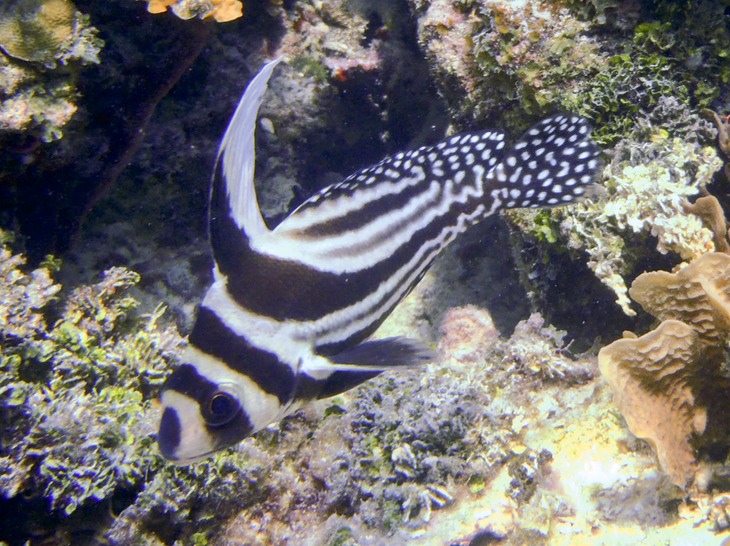
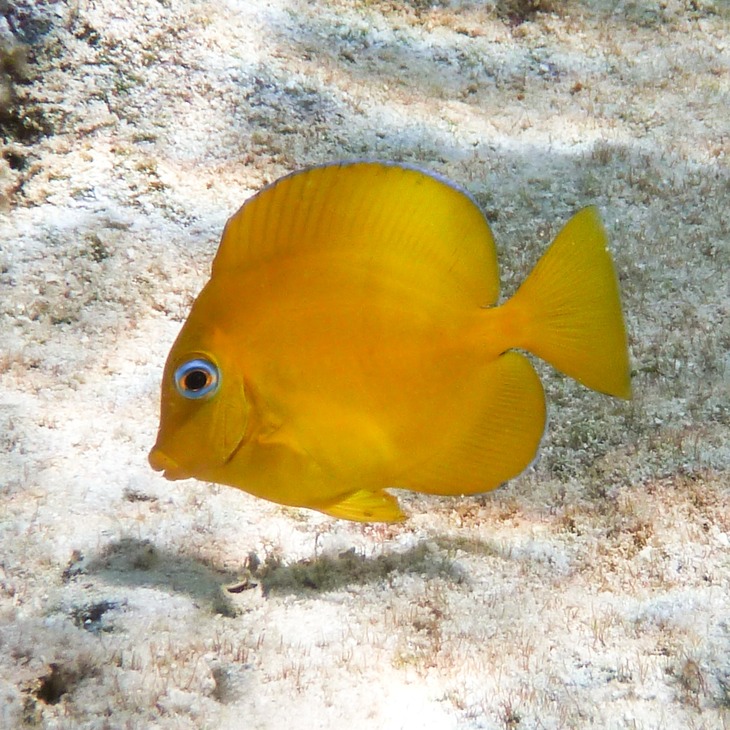
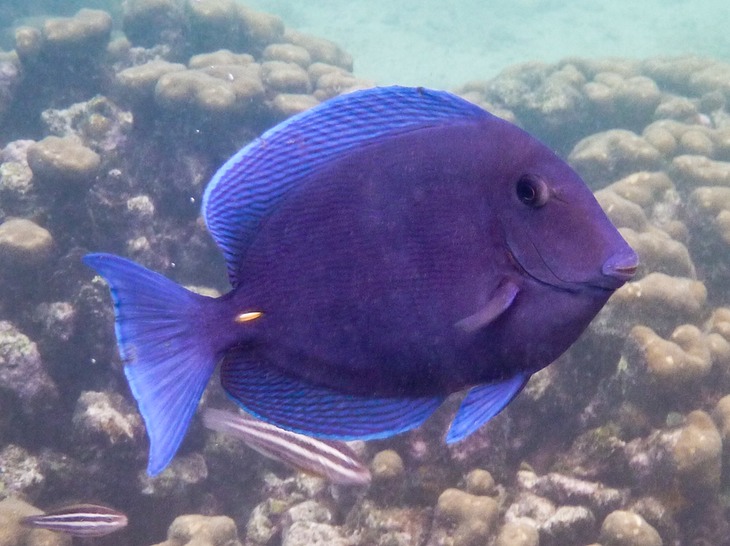
The spotted drum seems to "grow into" its dorsal fin with maturity and the juvenile blue tang contains no blue except for its iris, before turning into the deep blue of the adult version (& Nemo co-star).
I also saw a goldentail moray eel that was significantly smaller than the adults and had a nose-marking that led me to believe that it was a juvenile. Juvenile trunkfish look like a cute little round pet, with their big eyes and their tails tucked in. The littlest ones are the size of a marble.