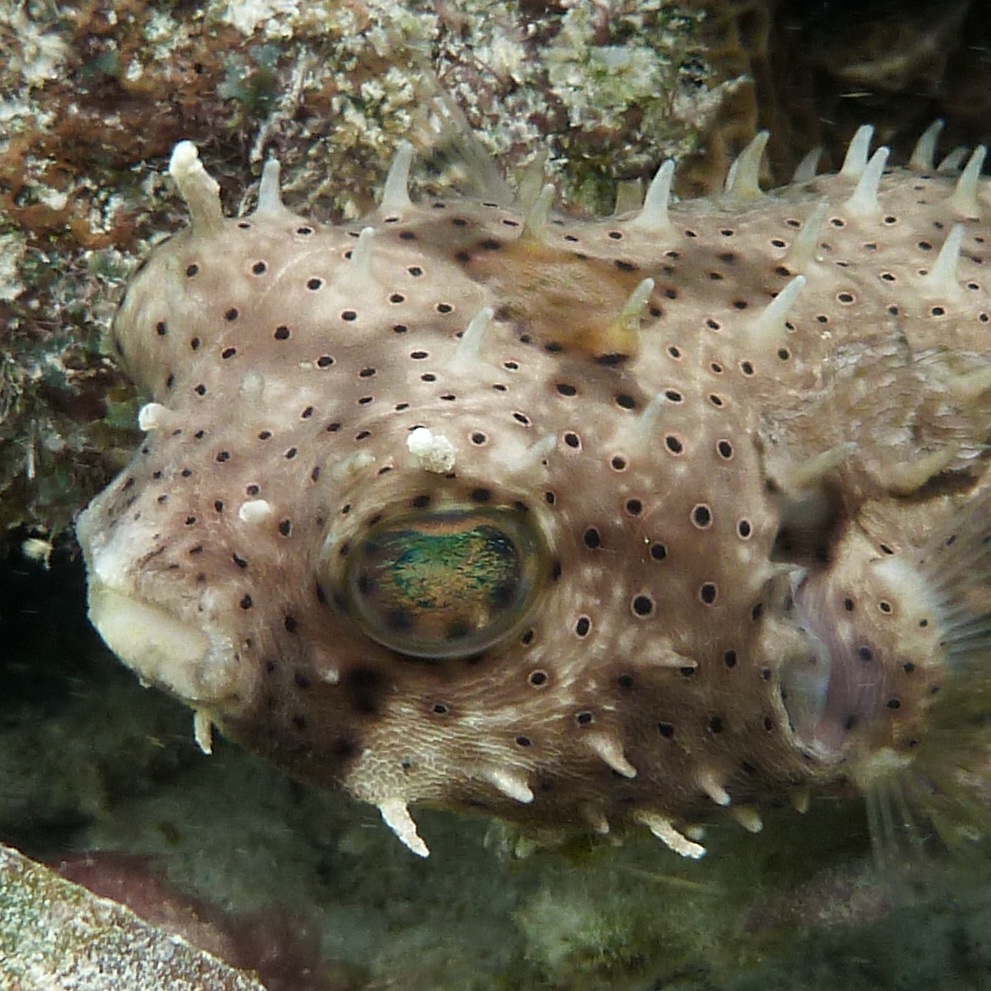
It amazes me that as much time as I spend in the water, there is always something new to discover every day. In one respect, you get more in-tune with seasonal or diurnal patterns and begin to notice interesting reef creature behavior. In the SW Caribbean, you also come across "uncommon" or "rare" fish over these many miles of healthy reefs, which according to my reef ID books constitute as unusual and exceptional sightings, respectively. Some species are designated as "not reported" for a given area and relevant information is requested at reef.org for updating data.

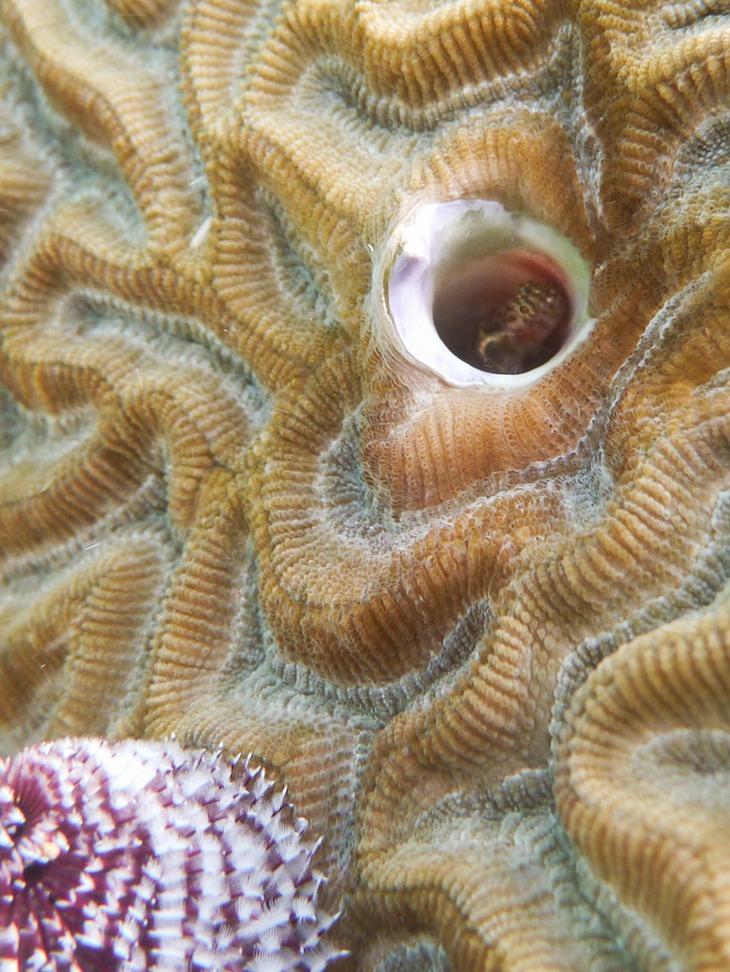
An "uncommon" find for me recently was the leopard and orangesided gobies mentioned previously. I've seen them on about four occasions, hiding on coral. They are very small and camera shy, until I went back day after day and they started to get used to me.
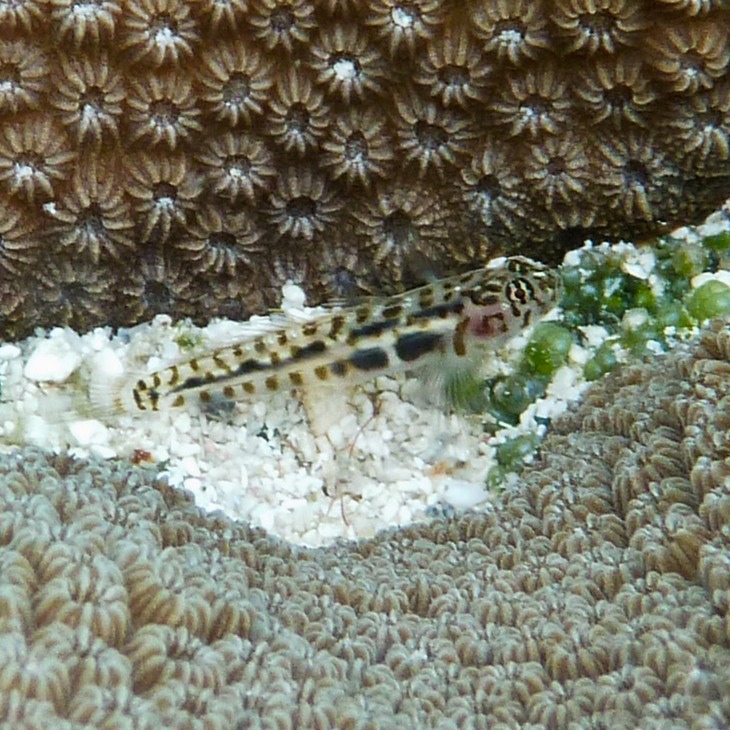
Recent "rare" finds include banded pipefish, a pygmy octopus and a bridled burrfish.
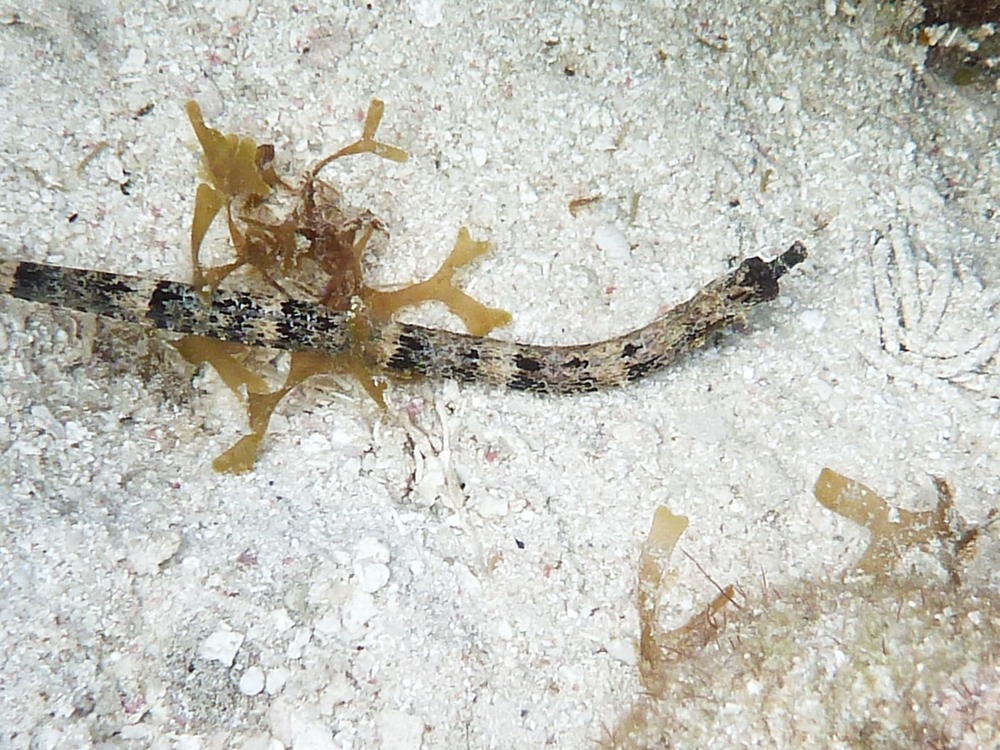
The pipefish are in the same family as seahorses (as yet unseen) and have similar shaped snouts. Once detected, I saw these a hand-full times all around the same time period.

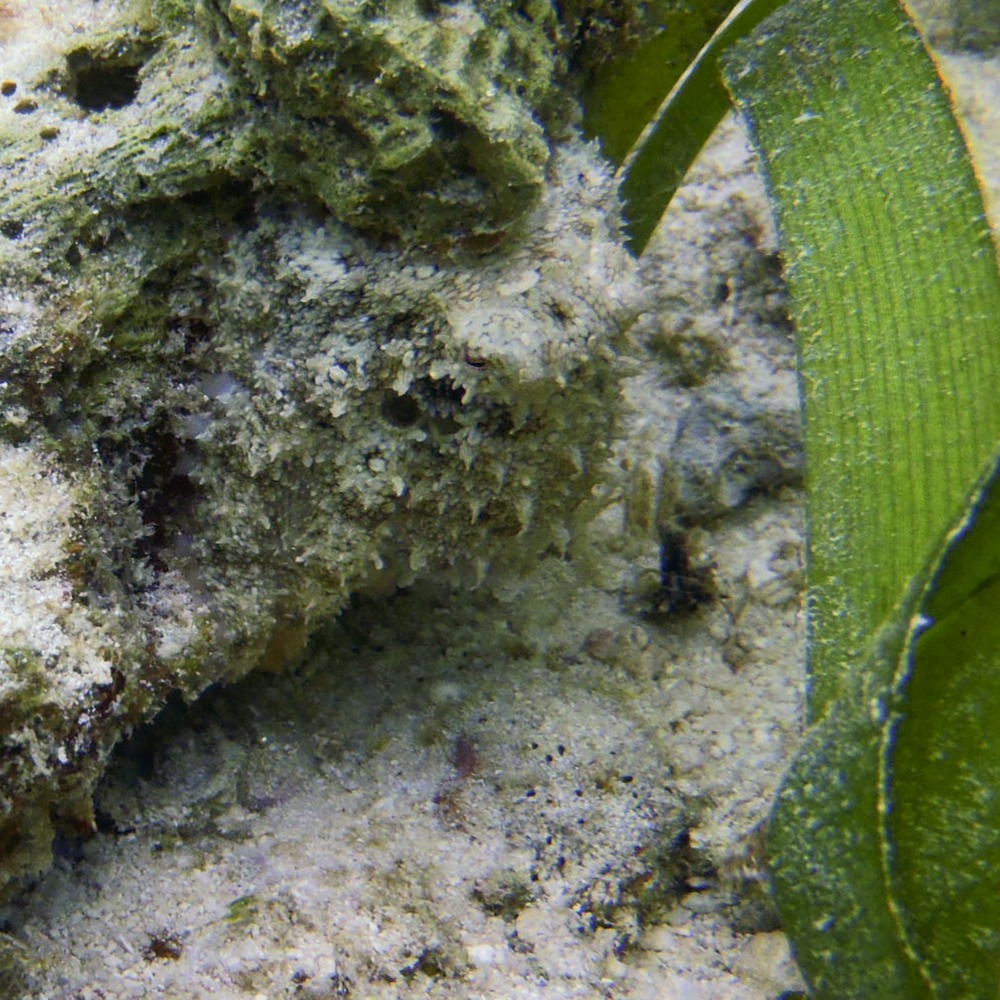
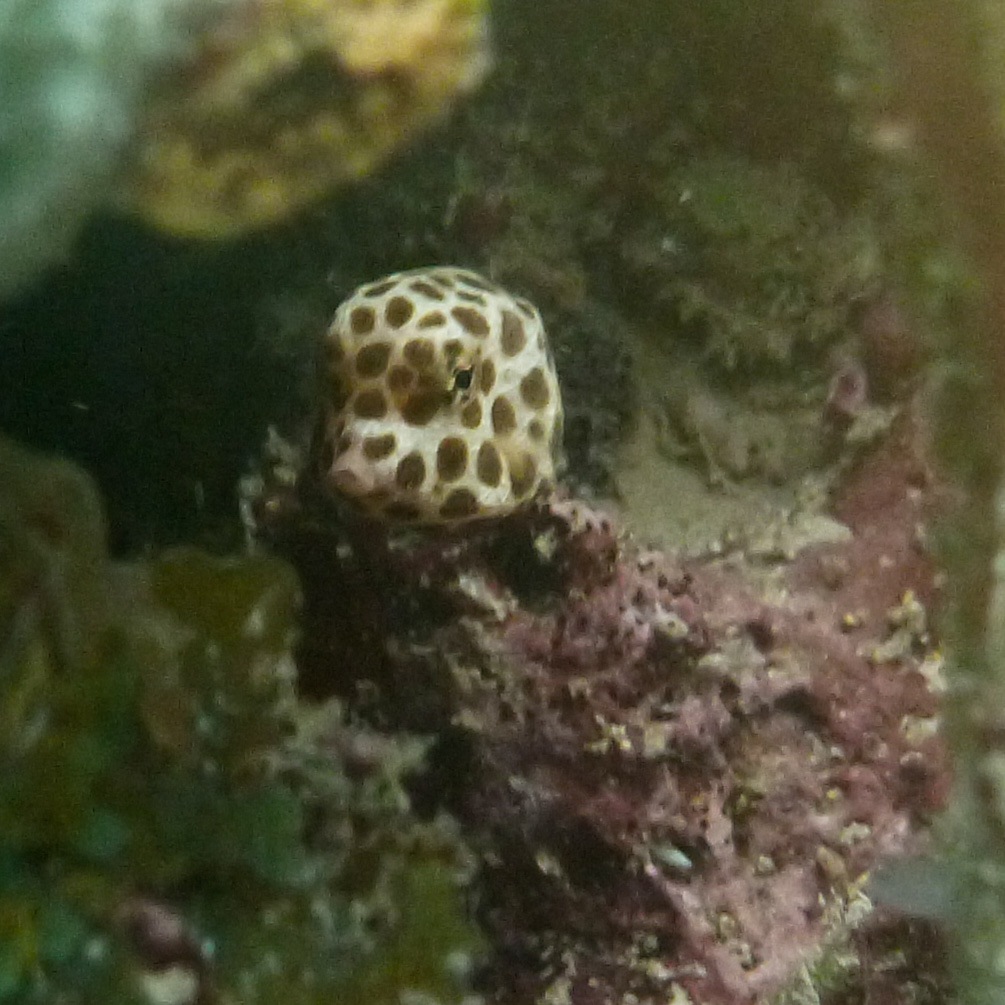
The pygmy octopus are masters of camouflage and very hard to photograph well when exposed in rock or grass. The bridled burrfish, with spines constantly erect has fantastic, iridescent eyes.


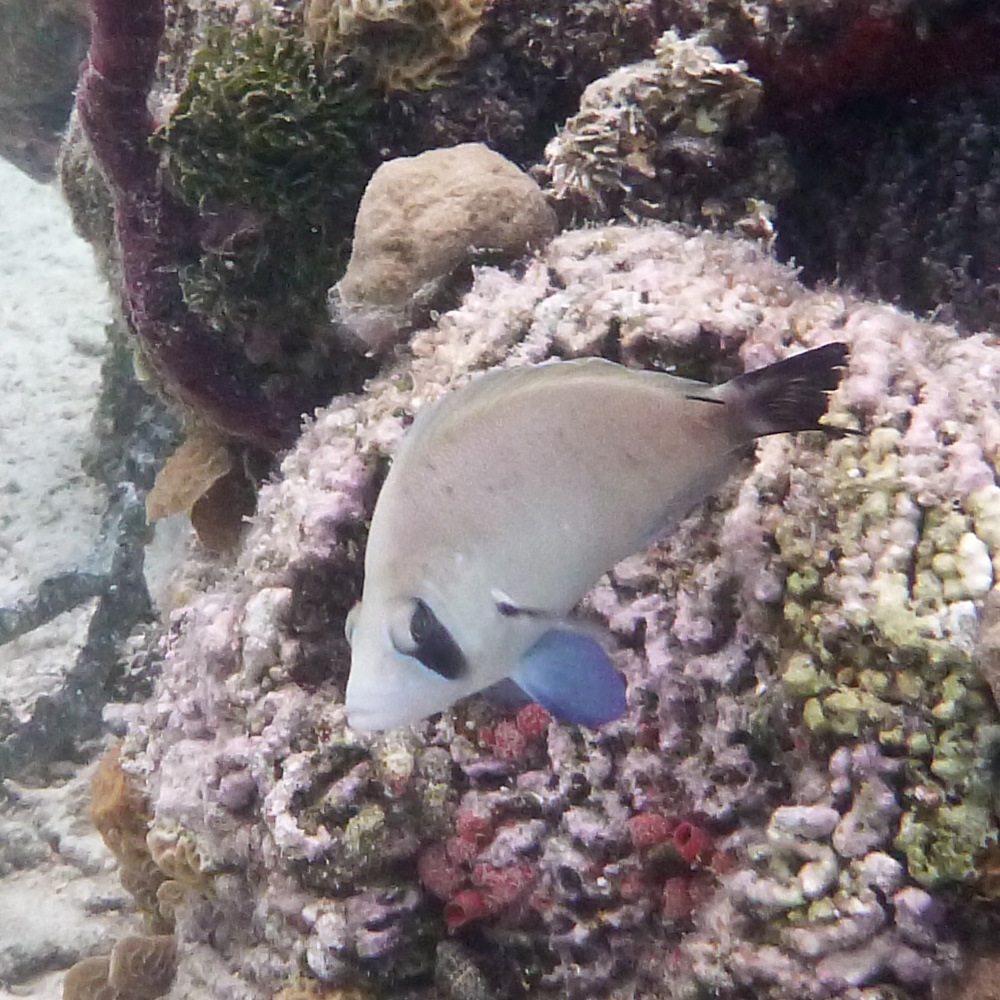
I also came across a "not reported" fish in Panama recently that I'll have to submit to reef.org, as the book has it only documented as far south as Providencia Island. This masked hamlet caught my eye due to its blue ventral fins hanging down, which I at first thought was an isopod or other sort of parasite. What a distinctive look this fish has with its black mask & white body with big blue fins and hamlet highlights!
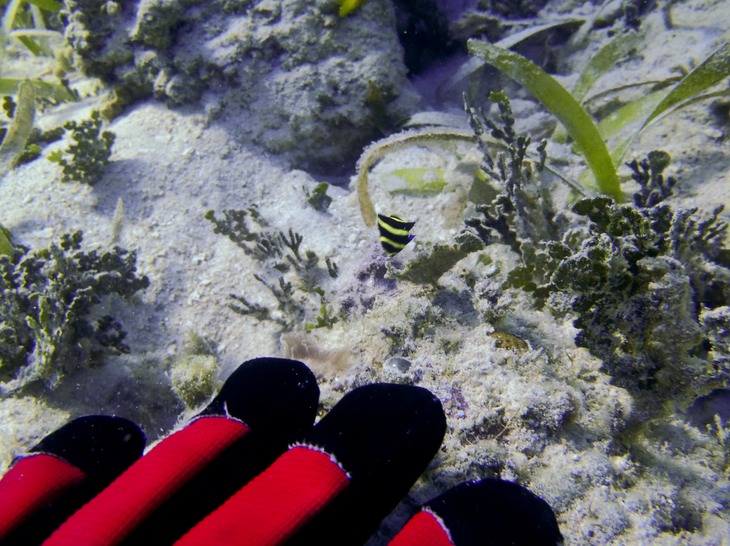
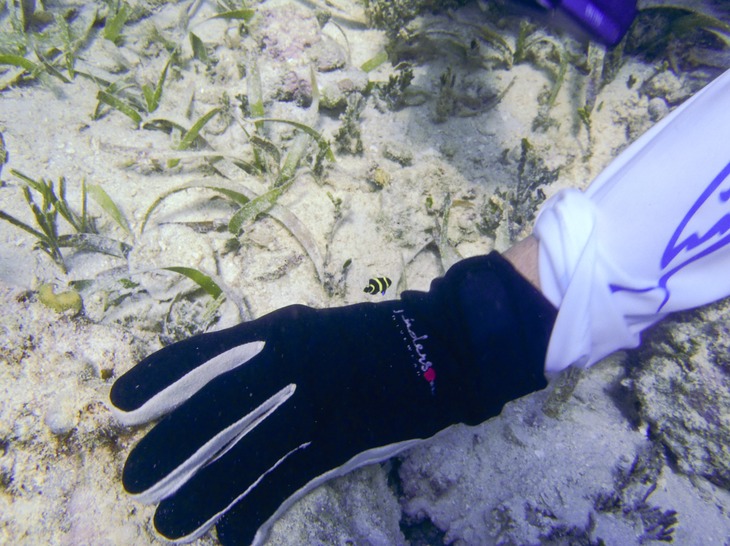
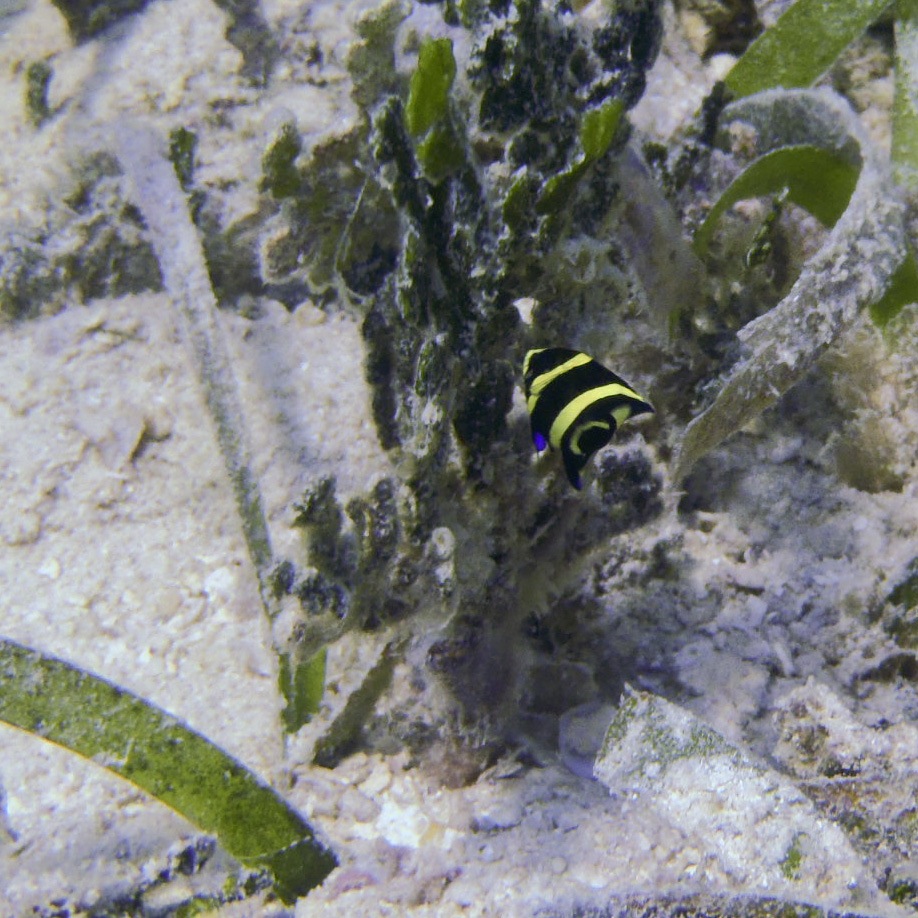
Some of the best personal finds are more common species, but still just as exciting. The juvenile fish are always a huge favorite with their big eyes and hyper swimming. The small trunkfish are little round balls and this baby french angelfish worked hard to swim out to clean our gloves, both about 1/2 inch in size.
Other times, something catches your eye to or from the reef over sand or grassy pastures. It is a thrill to see a mantis shrimp scuttling out on the reef, since they will run and hide immediately after being detected.
It is always worthwhile to check inside an empty shell, since you never know what is living in them. One day I saw a flash of movement out and into a conch shell. It turned out to be a swimming crab catching a bristleworm in a classic predator/prey struggle.

